Loading…
General Knowledge
Chapter 1 of 10|Topic 1 of 6
Safe Driving Fundamentals
Safe driving in a commercial vehicle starts with understanding how different a large truck or bus handles compared to a passenger car. Commercial vehicles are heavier, longer, and taller. They take longer to stop, need more room to turn, and have larger blind spots. As a CDL driver, you are held to a higher standard because the consequences of a crash are far more severe.
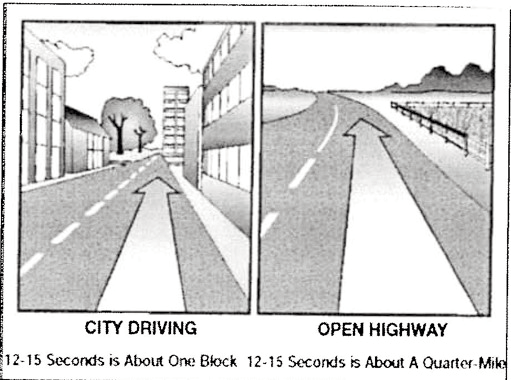
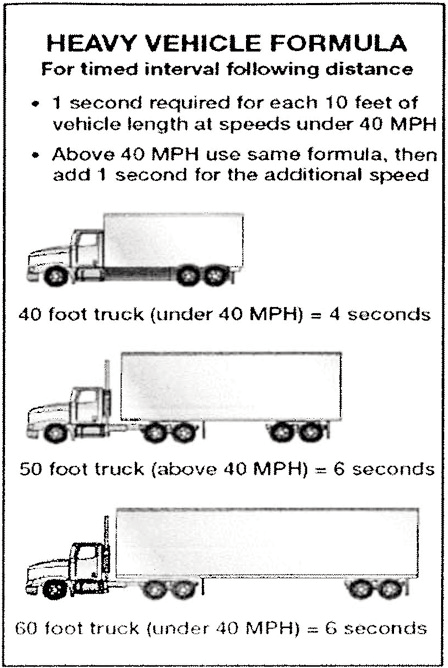
Following distance is one of the most critical safety habits. The general rule is at least one second of following distance for every ten feet of vehicle length at speeds below 40 mph, plus one extra second. Above 40 mph, add an additional second. For a 60-foot truck at 55 mph, that means at least 7 seconds of following distance. In poor conditions such as rain, snow, or fog, double the distance.
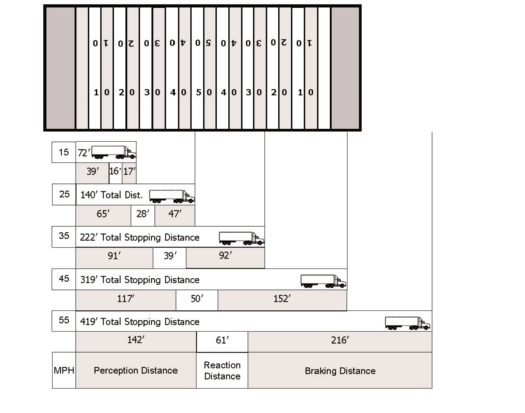
Speed management saves lives. The number one cause of truck rollovers is excessive speed in curves and on ramps. When approaching a curve, slow down before you enter it, not while you are in it. Posted speed limits are designed for passenger vehicles — your loaded truck needs a lower speed. On downgrades, use the snub-braking technique: apply brakes firmly when your speed is 5 mph above your safe speed, then release until speed builds again. This prevents brake fade, which is the loss of braking power from overheated brakes.
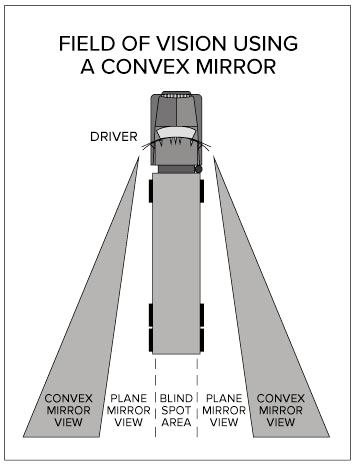
Blind spots, also called No-Zones, surround every commercial vehicle. The right-side blind spot extends roughly two full lanes and is the largest and most dangerous. The left-side blind spot is smaller but still significant. The front blind spot can extend 20 feet in front of the cab, and the rear blind spot means you cannot see anything directly behind the trailer. Adjust your mirrors before every trip, and check them every 5 to 8 seconds while driving.
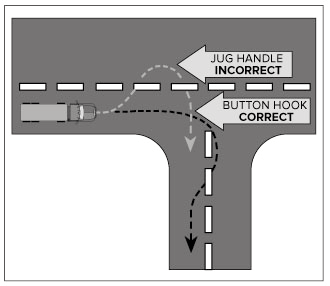
When making right turns, remember that rear wheels follow a shorter path than front wheels. This is called off-tracking. Turn wide as you complete the turn, but do not swing left before turning right — that creates a dangerous squeeze point for other vehicles. Left turns in an intersection should be completed past the center of the intersection before turning.
Key Points to Remember
- 1Follow at least 1 second per 10 feet of vehicle length, plus 1 extra second above 40 mph
- 2Excessive speed in curves is the #1 cause of truck rollovers
- 3Use snub braking on downgrades: brake hard at 5 mph above safe speed, then release
- 4The right side has the largest blind spot — check mirrors every 5 to 8 seconds
- 5Off-tracking means rear wheels cut inside the path of front wheels in turns
12 practice questions cover this material. Practice them now